
Orthodontics is the branch of dentistry that deals with the alignment of teeth, correction of bite (occlusion), and harmonization of the relationship between the two jaws.

Why is orthodontic treatment important?
Properly planned orthodontic treatment brings benefits that go far beyond aesthetics:
It corrects the position of the teeth and bite, avoiding problems such as unstable, deep, open, or reverse occlusion.
It prevents dental and gum disease. Properly aligned teeth are easier to clean, which reduces the risk of cavities and inflammation.
It improves aesthetics and contributes to greater confidence in one’s smile.
Prevents tooth wear or subsequent conditions. Correcting tooth positions in time can avoid subsequent problems with the temporomandibular joint.
Stages of orthodontic treatment
- First consultation
The orthodontist performs an initial assessment and discusses your expectations and needs with you. The necessary documentation for planning is prepared: digital models, photographs, X-rays, CT scans, etc.

- Case analysis and treatment plan
Based on the data obtained, the doctor thoroughly analyzes your situation and formulates a complete diagnosis and a personalized treatment plan.
- Second consultation
This is when we discuss the proposed plan together, explain the available options, and answer your questions.
- Applying the dental appliance
Depending on the type of braces, you will receive all the necessary instructions regarding hygiene and nutrition. Check-ups may be monthly or less frequent, depending on the type of braces.
- Contention period (results stability)
After completing the active treatment, an essential stage follows: maintaining the achieved results. This is done with the help of a fixed retainer, a transparent mouth guard, or a retention plate, depending on the case.
What type of dental appliance is right for you?
The right orthodontic appliance is chosen with the help of the doctor, following a detailed assessment.
Each patient is different, and the treatment plan must be tailored to each individual’s needs and lifestyle.
Clear aligners
Orthodontic treatment with clear aligners is 100% digital and uses a series of thin, clear aligners that gradually move the teeth into the desired position.
The orthodontist creates the complete treatment plan using a software, and each aligner represents a certain stage in the controlled movement of the teeth. As a rule, the aligners are changed every 7 days.
Advantages of treatment with clear aligners
- Discretion – the transparent material makes the device almost invisible;
- Comfort – the aligners are thin and flexible and do not irritate the gums;
- Natural speech – does not affect pronunciation;
- Easy hygiene – as they are removable, you can brush your teeth and eat without restrictions;
- Faster treatment – in some cases, it can be more effective than traditional braces;
- Increased control – the dentist can adjust the position of each tooth for a predictable and balanced result.
What you need to know about aligners
- They must be worn 22 hours a day, being removed only during meals and tooth brushing;
- Treatment depends heavily on patient cooperation; if the aligners are not worn correctly or long enough, the result may be compromised;
- Depending on the complexity of the case, treatment can last from a few months to 2 years;
- Visits to the orthodontist are infrequent, every 2-3 months;
- You may feel a slight tension in your teeth, but it is mild and temporary.

Brackets
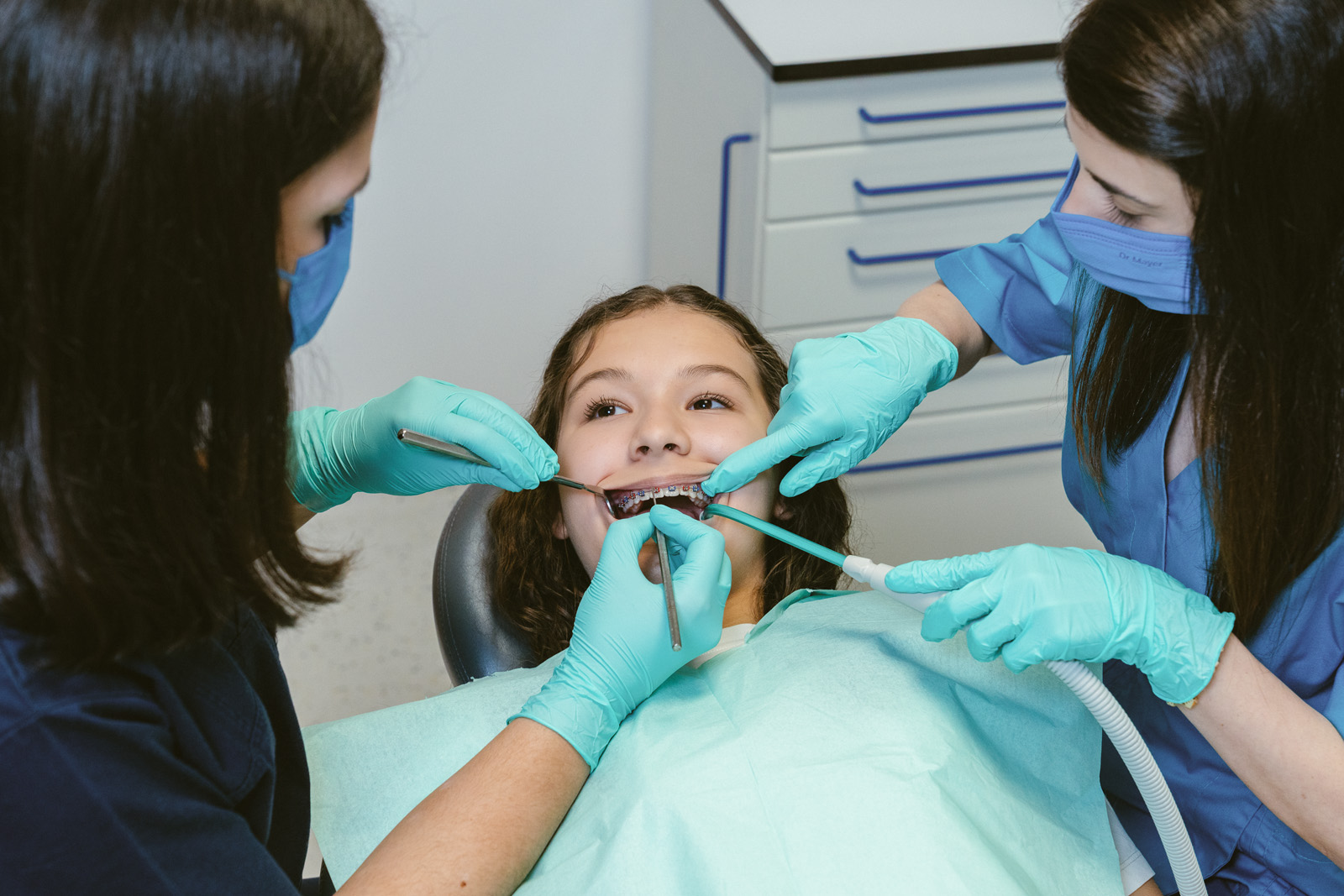
Brackets are prefabricated orthodontic elements, created specifically for each tooth. They are attached directly to the tooth surface with a special adhesive that does not affect the enamel.
Brackets are connected to each other through a metal wire (orthodontic arch), which is changed periodically. This exerts gentle and constant pressure on the teeth, gradually guiding them into the correct position.
After each adjustment (usually monthly), there may be slight sensitivity or discomfort, but this usually disappears within 2-3 days.
Advantages of brackets treatment
- Increased efficiency – for complex anomalies or large tooth movements, braces can provide better control and faster results than clear aligners.
- Convenience – as a fixed appliance, it does not need to be attached and detached daily, making it easier to manage in everyday life.
- Cost – in some cases, braces treatment may be more affordable than aligner treatment.
Orthodontics is about more than just a beautiful smile.
Although a beautiful smile is important, the main goal of orthodontic treatment is the health and functionality of the masticatory system.
For things to work properly, there needs to be a balance between several factors: the position of the teeth, the way they touch when we bite, the activity of the muscles involved in chewing, and the functioning of the temporomandibular joint (TMJ).
These components are interconnected, and an imbalance in one of them can lead to problems throughout the entire system.
We look forward to seeing you at the Liren clinic, where together we will find the best version of your smile.