
Dental prosthetics
Digital technology has completely changed the way dental treatments are performed.
Today, dental work is planned and performed with a level of precision and customization that was impossible to achieve in the past, and everything happens faster and more comfortably for the patient.
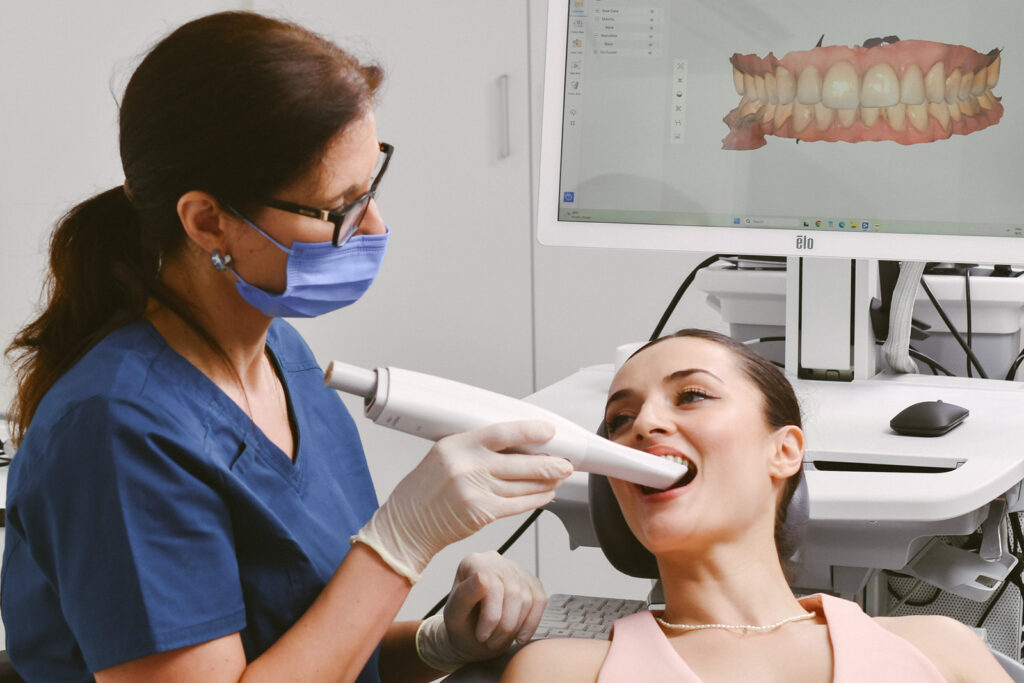
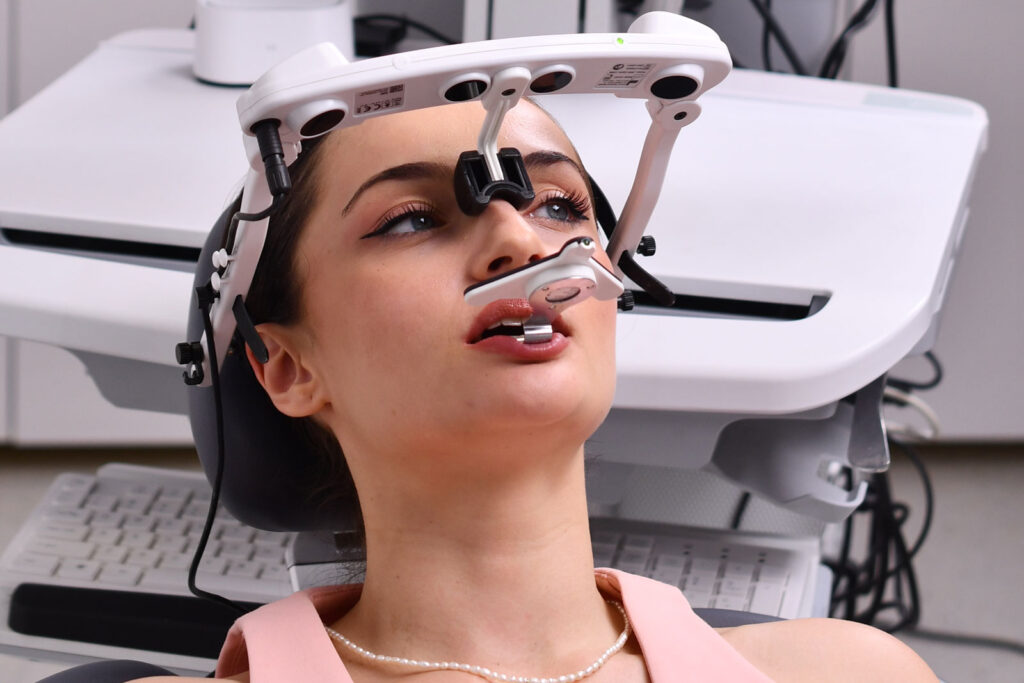
At Liren, prosthetic work is 100% digital
We use a fully digitized workflow for prosthetic work, which allows us to achieve results that are perfectly tailored to each patient, both functionally and aesthetically.
It all starts with a 3D scan of the teeth and gums – a comfortable, fast, and impression-free process.
Then, using a digital facial arch, we record your bite and jaw movements and connect this data to the actual position of your facial structures.
All the information is entered into design software, where the dentist and dental technician collaborate in real time to create a virtual simulation of the future prosthetic work.
This process is extremely valuable, especially in complex rehabilitations, because it allows you to see in advance what your smile will look like, provide feedback, and actively participate in decisions regarding the shape, color, or position of your teeth.
The restorations are then milled from solid blocks of ceramic or zirconium or 3D printed.
Veneers
A beautiful, healthy smile is not just a matter of aesthetics – it boosts your self-confidence and can have a positive impact on your social and professional life.
If you want to improve the color, shape, or proportions of your teeth, dental veneers are a modern, effective, and minimally invasive solution.
What are dental veneers?
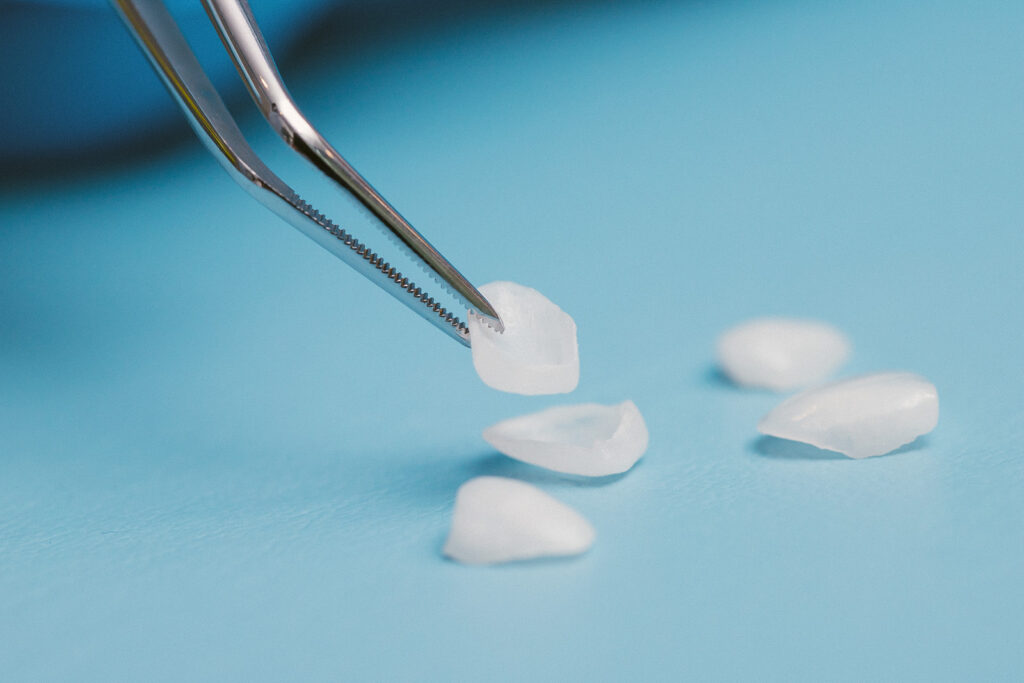
Dental veneers are very thin sheets, customized for each patient, made of state-of-the-art materials such as ceramic or composite.
They are applied to the visible surface of the teeth and cover imperfections, providing a more uniform, brighter, and balanced smile.
Advantages of dental veneers
Impeccable aesthetics – Veneers mimic the translucency, texture, and natural shine of teeth. They can change the color, shape, and slightly the position of teeth for a more balanced and natural smile.
Correct imperfections – They are ideal for: covering stains or discoloration, closing small gaps between teeth, masking cracks or irregularly shaped teeth.
Durability – Ceramic veneers are extremely durable over time, do not change color, and are resistant to wear.
Minimally invasive procedure – In most cases, the tooth requires minimal polishing, and the treatment is completed quickly and without discomfort.
At the Liren clinic, dental veneers are made using a fully digitalized process.

It all starts with a 3D scan and continues with a digital simulation of your future smile. This allows you to visualize the result before starting treatment and actively contribute to choosing the shape and color.
Digital technology helps us create veneers that are precisely tailored to your dental structure, for a result that looks natural and suits your physiognomy. And the result is predictable, because you are part of the process, alongside your doctor.
Dental inlay
An inlay is a prosthetic piece made in the laboratory, designed to reconstruct damaged portions of a tooth. It is used especially when the damage does not require complete coverage with a crown, thus being a more conservative solution.
It can be made of ceramic or composite and has the advantage of preserving as much of the healthy structure of the tooth as possible.
Unlike traditional fillings, inlays are constructed from a digital impression and then manufactured in a laboratory. They are much more resistant, fit perfectly, and reduce the risk of tooth fracture.

Dental crown
A dental crown is a custom restoration that completely covers the affected tooth, restoring its shape, function, and aesthetics. It is recommended in cases of extensive decay, fractures, or after endodontic treatments.
At Liren, all crowns are made digitally for a precise fit and natural aesthetics.
Types of dental crowns:
- All-ceramic crown
- All-zirconia crown
- Metal-ceramic crown – with a metal framework and ceramic coating, it is recommended for less visible areas where strength is a priority.
Dental bridge
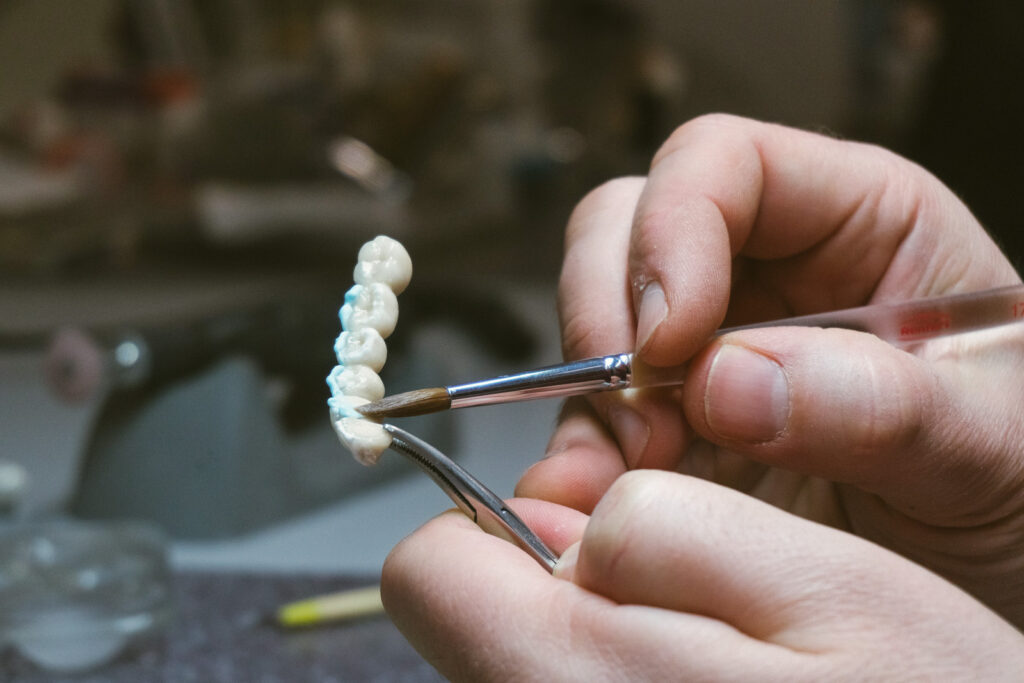
A dental bridge is a fixed restoration that replaces one or more missing teeth. It is anchored to adjacent teeth or implants and completely restores the function and natural appearance of the smile.
Proper care of a dental bridge includes:
Daily brushing: Use a soft-bristled toothbrush and pay special attention to the area between the bridge and your natural teeth. For effective cleaning, one can use small interdental brushes or special brushes designed for bridges.
Special dental floss: we recommend using types of dental floss designed for bridges or interdental devices that allow effective cleaning under the bridge and between teeth.
Mouthwash: rinse daily with an antimicrobial solution to reduce plaque and complete your oral hygiene routine.
Regular dental checkups: Regular visits for professional cleaning and checkups are essential for gum health and the durability of the bridge.
Dentures
Dentures are a removable solution for replacing missing teeth. They can be full (when all teeth within an arch are missing) or partial (for a few teeth).
Types of dentures:
Full dentures replace all the teeth in an arch (upper or lower). They are made of acrylic or other easily adaptable materials and are a quick solution for patients who no longer have any teeth in the arch. They restore chewing function, dental aesthetics, and support facial structures.
Partial dentures are used when one or more teeth are missing, while preserving the existing natural teeth. They are fixed with discreet clasps that anchor to the remaining teeth. They restore chewing function, smile aesthetics, and help prevent the migration of adjacent teeth.
Skeletal dentures are removable devices with a metal structure (usually made of titanium or biocompatible alloys) to which artificial teeth are attached. They are supported by the remaining natural teeth through special fixed or articulated systems. They ensure stable fixation, efficient chewing, and clear speech. They are ideal for patients who cannot benefit from implants and prefer a durable solution without surgery. Being removable, they are easy to clean and repair.
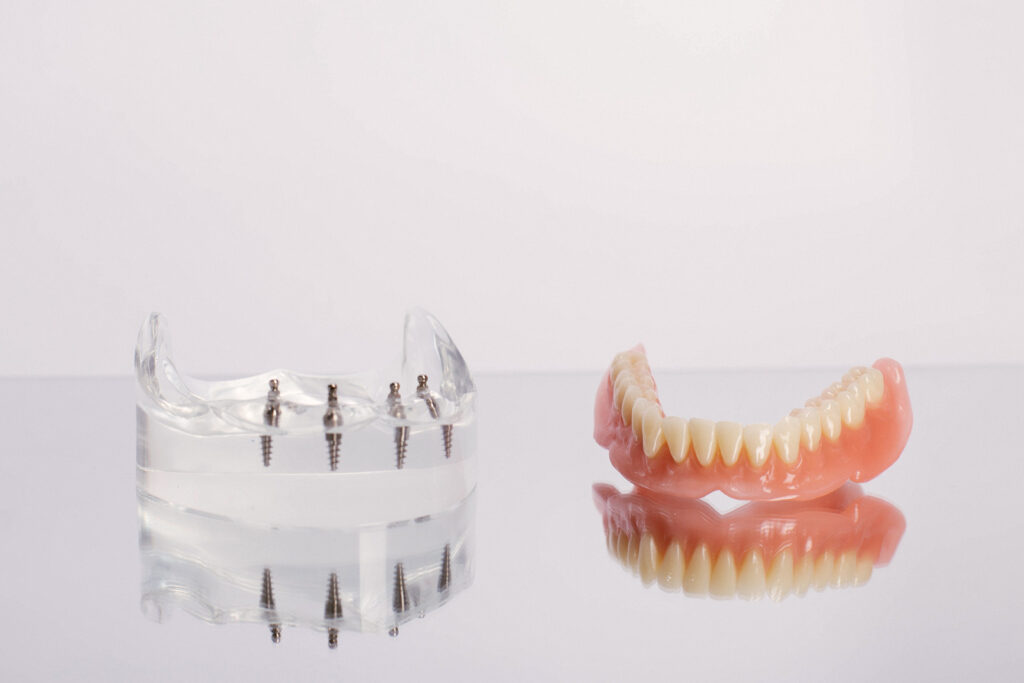
Implant-supported dentures, unlike classic dentures, which are supported by gums or natural teeth, are firmly fixed on two or more implants inserted into the alveolar bone. They are made of acrylic, reinforced with biocompatible metal.
Advantages of implant-supported dentures:
Stability and comfort: They do not move during chewing or speaking.
Increased durability: High-quality materials and implant fixation extend their lifespan.
Prevents bone resorption: Implants stimulate the bone, helping maintain facial volume and contour.
Natural aesthetics: Closely resembles the appearance and function of natural teeth.
Easy to clean: Being removable, they can be easily cleaned outside the oral cavity.
Bruxism mouth guard
Bruxism, or involuntary teeth grinding or clenching, especially during sleep, but sometimes also during the day, can have serious effects on oral health.
Tooth wear, fractures, facial muscle pain, headaches, or temporomandibular joint discomfort are just some of the associated complications.
An effective solution for preventing these effects is a bruxism mouth guard.

What is a bruxism mouth guard?
A mouth guard is a customized device made of transparent, rigid material that is worn over the teeth at night or during periods of intense stress. Its role is to protect the teeth, facial muscles and jaw joint by acting as a barrier between the arches to prevent excessive friction and muscle tension.
At Liren, bruxism mouth guards are made digitally, in a completely customized workflow.
Benefits of wearing a mouth guard
Teeth protection: prevents wear, fractures, and cavities caused by friction.
Muscle relaxation: reduces tension and facial pain caused by involuntary contractions.
Joint support: relieves discomfort in the temporomandibular joint (TMJ).
A more peaceful sleep: eliminates grinding and reduces discomfort that affects sleep quality.
Longevity for dental work: protects existing crowns, bridges, or implants.
When should the mouth guard be worn?
The mouth guard is generally worn at night, but it can also be worn during the day when you feel tension or realize that you are clenching your teeth. An evaluation by your dentist is essential for choosing the right mouth guard and ensuring that it fits your teeth perfectly.

How is a bruxism mouth guard made?
Assessment and digital impression: the dentist carefully examines the situation and records the exact shape of your jaws.
Mouth guard fabrication: the mouth guard is manufactured in the laboratory based on your digital impressions so that it fits perfectly.
Fitting and adjustment: the mouth guard is tested, and the dentist makes sure it is comfortable and works properly. Adjustments are made if necessary.
In conclusion
A bruxism mouth guard is an effective and non-invasive solution to protect your teeth, muscles, and jaw joint.
In more advanced cases, where there is already severe tooth wear or joint problems, treatment may also include functional rehabilitation of the entire dentition.
If you know you suffer from bruxism, have facial pain, or have noticed that your teeth are worn down, we invite you to visit Liren for a complete evaluation and a personalized treatment plan.
Request an appointment
Your satisfaction is our priority! Come to Liren Clinic and give us the chance to find the best version of your smile!